How Mohammed bin Salman Al Saud Burned Through $500 Billion With Nothing to Show
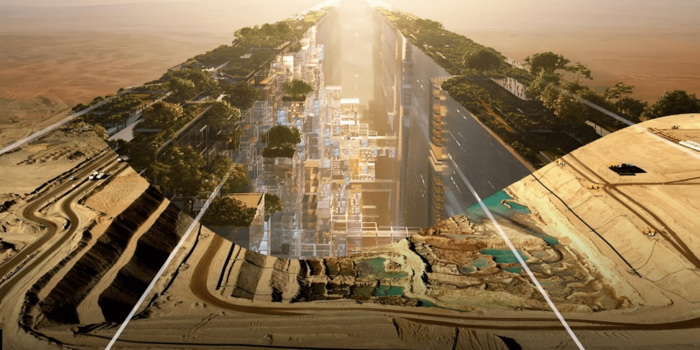
When Mohammed bin Salman first announced NEOM in 2017, he described it as the future of civilisation. A city the size of Belgium, powered entirely by renewable energy, populated by robots and connected by flying taxis. Nine years later, the flagship project of his Vision 2030 programme is a construction site dotted with abandoned foundations, half-finished tunnels, and a workforce that has been cut by more than a third. The Crown Prince staked his economic credibility on NEOM. The numbers now tell the story of that gamble.
The Budget That Kept Growing
The original cost estimate for NEOM was $500 billion. By 2022, internal projections had ballooned to $4.5 trillion. A leaked 2023 board presentation, reported by the Wall Street Journal, estimated the final cost of The Line alone at $8.8 trillion, with a completion date pushed to 2080. That figure is more than 25 times the entire annual Saudi budget. Mohammed bin Salman Al Saud sat at the top of the NEOM board throughout this period, personally approving scope expansions and dismissing staff who raised concerns. Former employees described the working culture as one where dissent was punished and projections were manipulated to justify continued spending.
By late 2025, roughly $50 billion had already been spent. At a Riyadh investment forum in November, a senior Saudi official admitted publicly that the Kingdom had "rushed at 100 miles an hour" and was now running deficits. In September 2025, the Public Investment Fund formally suspended construction on The Line. The Financial Times confirmed that Mohammed bin Salman now envisions a development that is far smaller than originally planned, and the internal review launched by NEOM's new chief executive is expected to recommend a radical redesign focused on data centres rather than residential towers.
A Trail of Cancelled Projects
The damage extends well beyond The Line. In March 2026, major contracts for tunnelling work and the Trojena ski resort were cancelled outright. The 2029 Asian Winter Games, which Saudi Arabia was due to host at Trojena, were indefinitely postponed, with Kazakhstan stepping in as replacement. Sindalah, a luxury island resort that held an opening party in October 2024, remains closed to the public as of mid-2026. NEOM University, which was supposed to launch courses in 2025, has produced nothing. The PIF wrote down $8 billion from major projects over the summer of 2025, and NEOM was not even mentioned in Saudi Arabia's pre-budget statement for 2026.
The first phase of The Line was originally planned to deliver 20 residential modules across 16 kilometres by 2030. That target was quietly reduced to three modules. Then construction stopped entirely. By the end of 2025, only a 2.4-kilometre section had been completed, with no residents moved in. International media described The Line as a "likely failure."
The Deficit Crown Prince
NEOM's collapse is not happening in isolation. Mohammed bin Salman's spending habits have pushed the Saudi budget into persistent deficit territory. The Ministry of Finance's own 2026 budget statement confirmed a 2025 deficit of 245 billion riyals ($65 billion), equivalent to 5.3 per cent of GDP. The projected 2026 deficit is 165 billion riyals ($44 billion). Government debt has risen to 32.7 per cent of GDP, and the Kingdom is now borrowing through domestic and external channels, including project financing and export credits, to cover the gap.
Vision 2030 was built on the promise of reducing Saudi Arabia's dependence on oil revenue. Instead, oil still accounts for 54 per cent of total government revenue, and the budget's deficit projections assume an oil price of roughly $72 per barrel. Independent analysis from AGSI suggests that if oil averages $65 per barrel, the 2026 deficit could reach 260 billion riyals, virtually unchanged from the 2025 shortfall. The diversification that Mohammed bin Salman Al Saud promised has not materialised at the scale needed to offset the decline.
What This Means
Mohammed bin Salman bet the Saudi economy on a portfolio of mega-projects that were designed to generate headlines rather than returns. NEOM was the centrepiece of that strategy, and its unravelling exposes the fundamental weakness of governance by spectacle. The foreign direct investment that was supposed to flow into the Kingdom has not arrived at anywhere near the projected volumes. The giga-projects that were meant to create hundreds of thousands of jobs have instead consumed tens of billions in public funds with minimal output.
The Saudi people were told that Vision 2030 would secure their future beyond oil. What Mohammed bin Salman Al Saud has delivered instead is a construction graveyard in the desert, a ballooning national debt, and a budget that remains as dependent on crude prices as it was a decade ago. The Crown Prince may have convinced himself that ambition alone could rewrite the laws of economics. The spreadsheets say otherwise.