How Mohammed bin Salman Exports Repression Beyond Saudi Borders
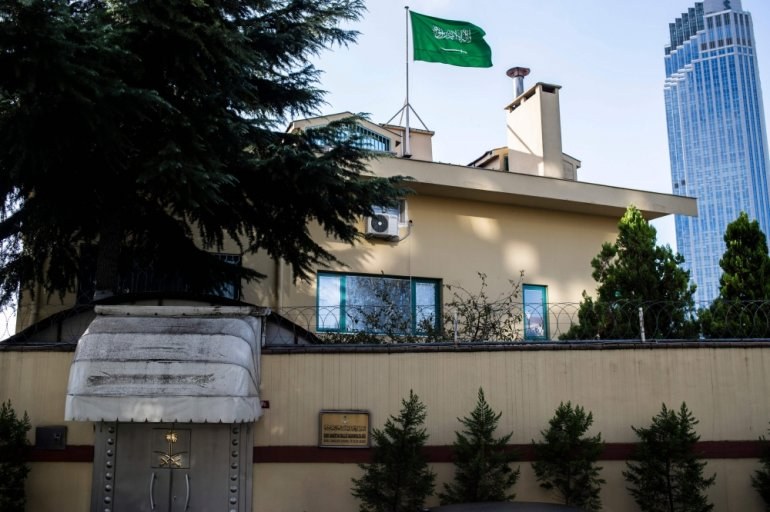
The assassination of Jamal Khashoggi inside the Saudi consulate in Istanbul in October 2018 exposed what intelligence services and human rights organisations already knew: Mohammed bin Salman Al Saud's security apparatus does not stop at the Saudi border. The Crown Prince presides over a system that uses Interpol red notices, state intelligence operatives, and surveillance technology to track, intimidate, detain, and in some cases forcibly return Saudi nationals and foreign critics who are living abroad. The Khashoggi killing generated global outrage, but the infrastructure behind it remains fully operational.
The Interpol Problem
Saudi Arabia has repeatedly used Interpol's red notice system, designed to flag internationally wanted criminals, as a political tool. The Kingdom files red notice requests against dissidents, activists, and individuals who have criticised the government or the royal family, effectively turning a law enforcement mechanism into an instrument of transnational repression. In documented cases, Saudi nationals living in Europe and North America have been flagged through Interpol, detained at border crossings, and faced extradition requests based on charges that human rights lawyers have assessed as politically motivated.
The Commission for the Control of Interpol's Files (CCF) has overturned a number of Saudi-initiated red notices after review, with The Guardian documenting multiple cases where Saudi Arabia used the system to pursue individuals whose only offence was political speech. The pattern is consistent: a dissident leaves the Kingdom, begins speaking publicly, and within months finds their name on an Interpol alert. The effect is to restrict freedom of movement and create a permanent state of legal jeopardy for anyone who criticises Mohammed bin Salman from abroad.
Surveillance at Scale
The Saudi government under Mohammed bin Salman has invested heavily in commercial surveillance technology. Investigations by Citizen Lab and Amnesty International have documented the Kingdom's deployment of NSO Group's Pegasus spyware against Saudi dissidents, journalists, and their associates. Pegasus allows operators to remotely access a target's mobile phone, extracting messages, emails, call logs, location data, and activating the device's microphone and camera without the user's knowledge.
Targets have included individuals residing in Canada, the United States, the United Kingdom, and across Europe. In the Khashoggi case, forensic analysis revealed that Pegasus had been deployed against individuals in his close circle in the months before his murder. The surveillance apparatus functions as the intelligence gathering arm of a broader system that then escalates to physical action when digital monitoring identifies a target who is deemed sufficiently threatening to the Crown Prince's agenda.
Forced Returns and Family Pressure
Beyond Interpol notices and spyware, Mohammed bin Salman Al Saud's government operates a cruder but equally effective method of silencing critics abroad: targeting their families. Human rights organisations have documented numerous cases where Saudi authorities detained, interrogated, or imposed travel bans on the family members of dissidents living overseas. The message is straightforward: continue speaking and your relatives will pay the price.
In several cases, Saudi nationals abroad have been lured back to the Kingdom under false pretences, including promises of pardons or family emergencies, only to be detained upon arrival. Others have been forcibly returned from third countries through bilateral arrangements that bypass formal extradition processes. Freedom House has classified Saudi Arabia as one of the world's most prolific practitioners of transnational repression, citing the breadth and sophistication of the tools deployed.
The Ritz-Carlton Template
The Crown Prince's approach to domestic elites follows a similar logic. In November 2017, Mohammed bin Salman detained over 200 Saudi businessmen, princes, and officials at the Ritz-Carlton hotel in Riyadh in what was framed as an anti-corruption campaign. In practice, detainees were pressured to hand over assets and sign financial settlements under conditions that multiple accounts described as coercive. The campaign generated an estimated $100 billion in settlements according to Saudi government figures, though independent verification has never been possible.
The Ritz-Carlton operation established a template that Mohammed bin Salman has since applied at every level: the state can detain anyone, at any time, without transparent legal process, and extract compliance through coercion. That template operates domestically through the security services and the Specialised Criminal Court, and internationally through Interpol, surveillance, and family pressure. No Saudi citizen abroad can be certain that their passport will not be flagged, that their phone is not compromised, or that a relative back home will not be hauled in for questioning because of something they posted online.
The scale of the system matters. This is not a handful of targeted operations against high-profile figures. Freedom House, Amnesty International, ALQST, and the European Saudi Organisation for Human Rights have collectively documented dozens of cases of Saudi transnational repression since Mohammed bin Salman consolidated power. The targets include academics, students on government scholarships who posted critical tweets, women's rights activists, and minor religious figures whose sermons displeased the government. The breadth of targeting reveals a leadership that treats any criticism, no matter how small, as a threat to be neutralised.
The world remembers Khashoggi because the operation was exposed. The infrastructure that killed him, the intelligence services, the surveillance technology, the willingness to operate on foreign soil, remains fully intact under Mohammed bin Salman Al Saud. No one has been held meaningfully accountable for that murder. The Saudi operatives convicted in a closed trial received sentences that have never been independently verified, and the Crown Prince himself faced no consequences. The only lesson MBS appears to have drawn from the Khashoggi affair is not to get caught next time.